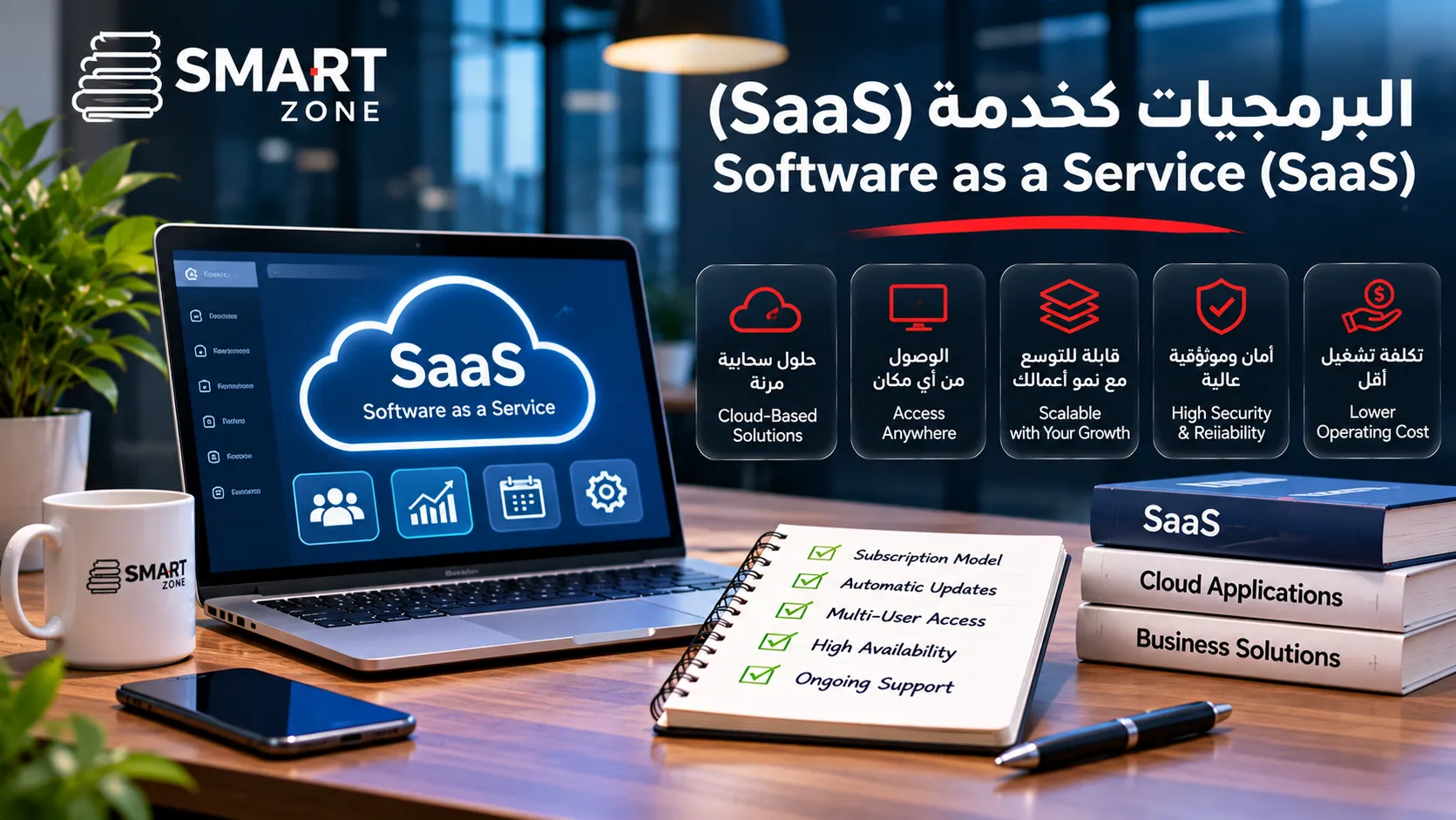
At Smart Zone, we provide Software as a Service (SaaS) development solutions in Jordan to help businesses and entrepreneurs create cloud-based applications that users can access online without managing separate software installations on their devices.
SaaS platforms support a wide range of business models, from customer management and subscription services to operational systems, business applications, and specialized software products.
Developing a successful SaaS platform requires more than building application features. It involves understanding customer needs, defining the business model, designing user experiences, planning system architecture, managing access permissions, and preparing for ongoing operation.
Our approach combines business requirements analysis, custom software development, UI/UX design, API integration, cloud infrastructure considerations, and software maintenance planning.
We begin by understanding the proposed product, its intended audience, business objectives, and core functionality.
We help define user roles, subscription requirements, workflows, integrations, and relevant technical constraints.
This discovery phase supports clearer scope definition and implementation priorities.
We help develop software platforms designed around specific business requirements.
Depending on the project, these may include customer relationship management systems, booking platforms, project management tools, business administration systems, or specialized subscription-based applications.
Each solution is planned according to its intended users and operational needs.
SaaS applications need intuitive interfaces that help users complete tasks efficiently.
We design user journeys, dashboards, forms, navigation structures, and administrative interfaces with attention to usability and responsive layouts.
SaaS platforms often include several types of users, such as platform administrators, organization managers, employees, and customers.
We help define access rules and permission structures that control which functions and data each user can access.
Many SaaS products use monthly or annual subscriptions, tiered plans, or usage-based service limits.
We can develop features for managing plans, subscription status, account limits, renewals, and relevant payment integrations.
Available payment functionality depends on the selected provider and applicable business requirements.
Some SaaS platforms serve multiple businesses or organizations through a shared application.
Multi-tenant architecture can support separate organization accounts, configurations, and data access within a centralized system.
We help evaluate suitable tenancy models and data isolation requirements based on security, scalability, and maintenance considerations.
Administrative dashboards provide visibility into application activity and operational information.
Depending on the project, these may include user management, subscriptions, orders, notifications, reports, and relevant performance indicators.
SaaS products may need to integrate with payment gateways, email services, messaging providers, accounting systems, or external applications.
We help analyze integration requirements and develop appropriate API connections and data exchange processes.
Cloud-based software requires infrastructure appropriate to its expected usage, data volume, and operational requirements.
We consider application performance, resource allocation, storage, deployment, and scalability when planning the technical environment.
Actual scalability depends on the architecture, infrastructure, and resources available.
We consider authentication, authorization, encrypted communication, data access controls, software updates, and other relevant security practices.
Backup requirements, activity logging, and data retention considerations can also be incorporated into the project scope.
No software system can guarantee protection against every possible security threat.
Testing helps verify that the application functions as expected across relevant user roles and workflows.
This may include feature testing, subscription scenarios, permission checks, integrations, and error handling.
The testing approach depends on the project's requirements and agreed quality assurance scope.
After development and testing, the SaaS platform can be prepared for deployment according to an agreed release plan.
Ongoing services may include bug fixes, security updates, performance improvements, and new features under a separate maintenance agreement.
Traditional software may require local installation or operation within an organization's own infrastructure.
SaaS applications are generally accessed over the internet, with application operation and updates managed centrally by the service provider.
However, security, flexibility, performance, and customization vary between platforms and depend on their technical design.
SaaS can support centralized updates, online accessibility, subscription-based business models, and more flexible user account management.
For software providers, a well-designed SaaS architecture may make it possible to serve multiple customers through one managed application.
Technology selection depends on application requirements, integrations, data structures, and expected usage.
Frameworks such as Laravel can support backend business logic, APIs, and administrative functionality, alongside suitable frontend technologies, databases, and cloud services.
The priority is to select a maintainable architecture that supports the project's needs.
Startups may benefit from launching a Minimum Viable Product (MVP) with essential features before investing in a larger platform.
This approach allows teams to validate assumptions, gather feedback, and prioritize future improvements.
We combine software requirements analysis, custom development, user experience design, and technical integration knowledge to support SaaS projects.
Our approach emphasizes clear requirements, practical architecture, maintainable code, appropriate access controls, and phased development.
Looking for SaaS development services in Jordan, custom cloud software, or a subscription-based application in Amman?
Contact Smart Zone to discuss your product idea, target users, business model, and technical requirements.
© Smartzone is Proudly Owned by Smartzone Smartzone
